About ValidAuto
Learn about our mission, technological blueprints, and model performance metrics.
Accelerating claims through modern computer vision
ValidAuto was founded as a conceptual exploration into automating vehicle damage inspections. By merging high-performance API structures with real-time browser visualizers, we aim to minimize the friction between fender benders and insurance checks. We successfully trained a transfer-learning model on MobileNetV2 features and built a structured inspection report generator.
Model Evaluation Metrics & Training Curves
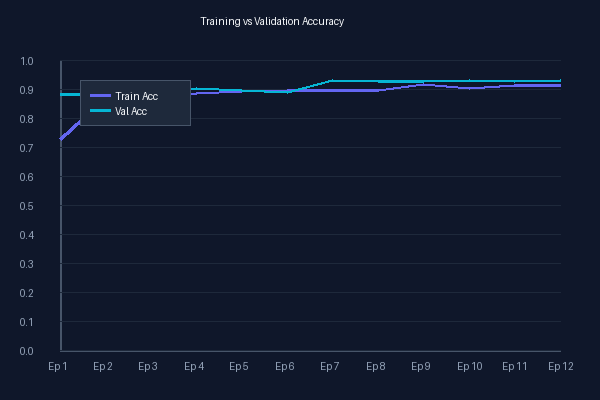
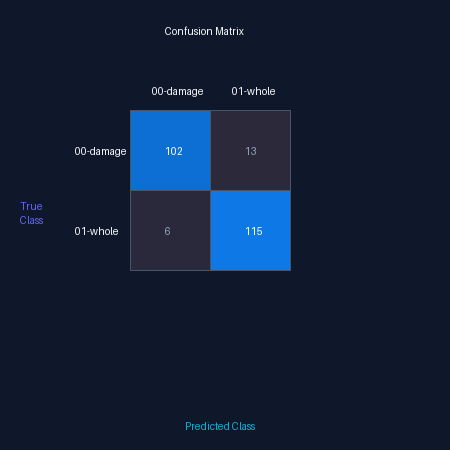
The following graphs are generated directly in the backend after data preprocessing, augmentation, and training. They show how validation accuracy progresses and map the classification confusion matrix.
Training & Validation Accuracy Graph
Confusion Matrix Grid
The Assessment Blueprint
Image Acquisition
The user uploads high-resolution photos of vehicle panels (fenders, doors, lights, bumpers) from multiple angles.
Spatial Segmentation
Computer vision models outline anomalous boundary contours, classifying scrapes, cracks, paint transfer, and structural dents.
Severity Indexing
Damage severity is mapped to a three-tier index (High, Moderate, Low) combined with a model confidence percentage rating.
Cost Extrapolation
Aggregates parts catalogs and local labor averages to construct a ballpark repair budget prior to manual insurance review.
Technology Stack
Next.js 14 (App Router)
Fast, SEO-friendly React framework providing static/dynamic server-side rendering and client routing.
Tailwind CSS
Modern CSS utility framework enabling fully responsive, grid layouts with micro-animations and beautiful dark modes.
TypeScript
Static type-safety across layouts, component props, and API request schemas.
FastAPI (Python)
High-performance, ASGI-compatible web framework built on standard Python type hints.